
Aleksa Palladino
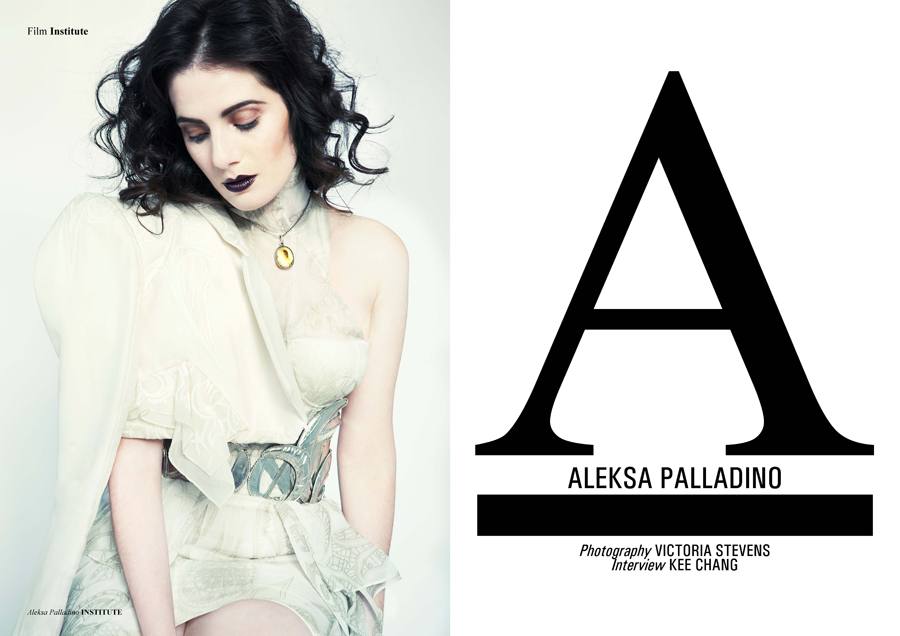
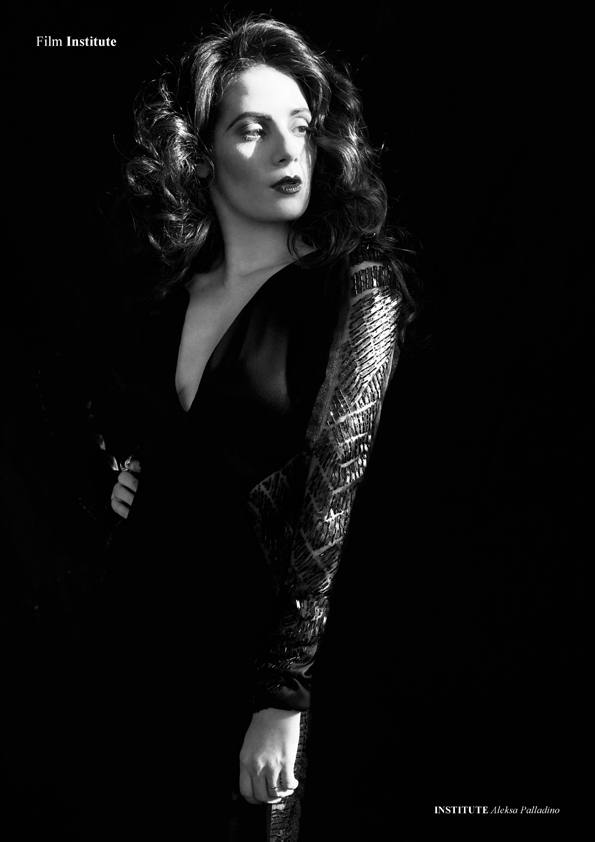
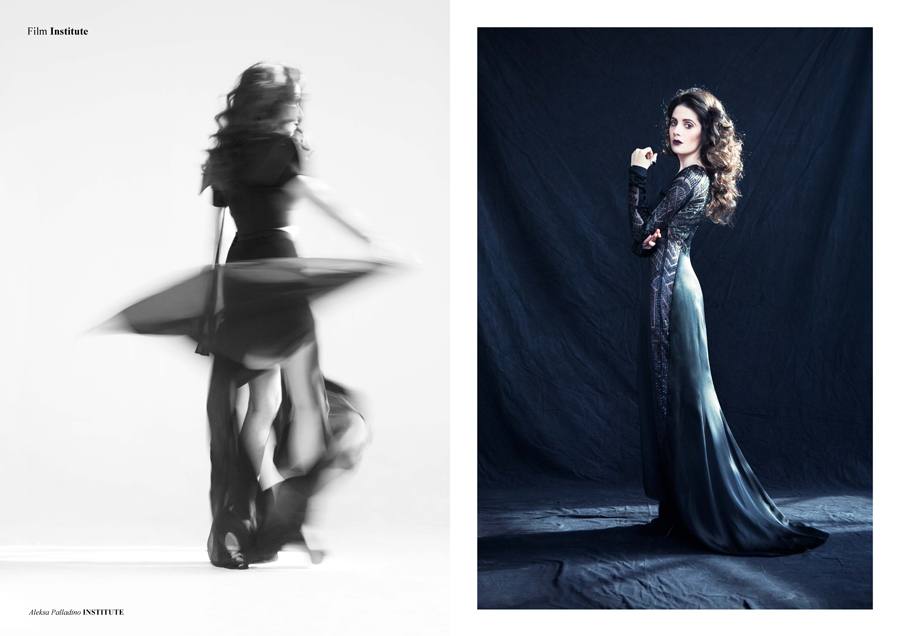
Onscreen, Palladino excels at inhabiting characters that are at once damaged and dangerous. She’s effortless in her ability to radiate emotions like a filament about to erupt, with a tenderness and honesty that gives her a gravitational pull. With a long list of leading roles in independent films under her belt, she’s perhaps best known for playing Angela Darmody on Boardwalk Empire—Michael Pitt’s dreamer wife who was unexpectedly gunned down in the hit HBO series. Palladino’s career continues to soar towards a brighter future in 2012, not only in film but also in music as she commands the stage as EXITMUSIC with her husband, Devon Church.
Institute: What can you reveal about your background? Aleksa: I was born and raised in Manhattan. My mom, my grandparents and I all lived in the same apartment. It was a pretty unique experience because everyone was an artist of some kind under that same roof. Both of my grandparents were painters and my mom was an opera singer. When you’re raised in a house full of artists, everybody is very similar in that they’re very invested in their own creativity.
Institute: How did acting become your life passion? When did you first realize that it was something you could pursue? Aleksa: I actually started acting and playing music at the same time when I was really young, but it’s difficult to pinpoint a definitive moment when I decided to pursue them. I knew fairly early on that I wanted to find an outlet where I felt comfortable expressing the deep emotions I didn’t feel comfortable expressing in my own personal life. I was drawn to the performing arts because it allows you to explore intricate feelings under the guise of being somebody else.
Institute: You were just 14 when you landed a starring role in Manny and Lo opposite Scarlett Johansson. How did that happen? Aleksa: I had auditioned for this casting director, Ellen Parks, a year before Manny and Lo—it was my first audition and I didn’t get the job—and she had always remembered me. Ellen looked up my family in the phonebook and she basically told my mom that there was a part I might be really right for. When I first read the script, I was terrified because I didn’t like the prospect of being rejected if they didn’t like me for whatever reason. I was never an outgoing kid or necessarily drawn to the spotlight. I never partook in school plays because I dreaded things like that.
Institute: What would you say was the most significant thing that you took away from working on Manny and Lo? Aleksa: It started my life down a path that I didn’t necessarily anticipate. I was always more certain that I would become a musician. The thing about acting is that it really takes you to a place where you can analyze the human experience. To be given a gift at 14 to become an actress where you’re forced to either sink or swim was invaluable to me. Manny and Lo was really the beginning of my conscious life in that way.
Institute: What do you make of the choices that you’ve made thus far in your acting career? Aleksa: The things that happen along the way always change your options when you’re an actor. I always aim to work on things that seem genuinely interesting to me. I was definitely limited in my choices before Boardwalk Empire came along. That show changed the quality of my options. I had done a lot of independent films for years, but I was still stuck in this weird limbo where you feel like you’re clearly part of the business, but you can’t move up—it’s a holding pattern. I’m also an adult now so that shifts a lot of things. When I was younger, the huge guiding force of what not to do was how embarrassing something might be for me. As an adult, and especially as a woman, you’re more in tune with the things you want said or represented through your work. I’m always on the lookout for roles that are written for a man that I can play as a woman. [laughs] I don’t want to be the wife, the girlfriend or whatever. Women are so much more interesting than that.
Institute: How would you describe EXITMUSIC’s sound? Aleksa: It’s like the question you getwhere your mind just goes completely blank. [laughs] I just hate all the options out there. I don’t like descriptions like “shoegaze” or “female-fronted”. We get all kinds of stuff. I feel like our songs have more urgency than something like “shoegaze”. We don’t sing lullabies, so that word doesn’t feel right. I think if I had to classify my own music and feel good about it, I wouldn’t be making the kind of music that I want to make. There’s a lot of flavor in it.

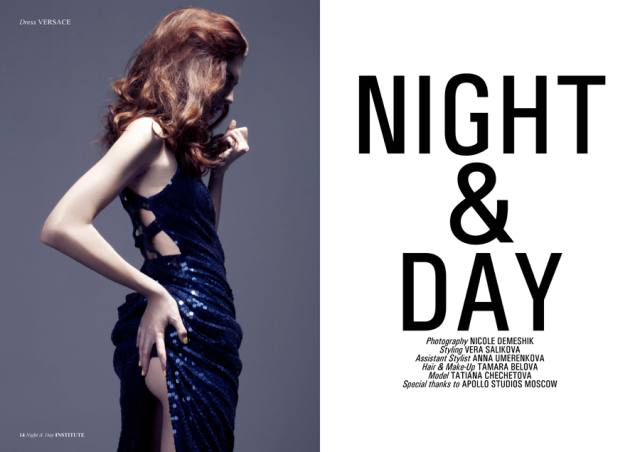
Night & Day
Keep reading →More from Institute





The Sunday Edit
One letter a week: the story we would have put on the cover, and what the archive turned up. No feed, no algorithm, no reason to miss it.
Institute Magazine. Published by NRCI Limited, registered in England and Wales (no. 15756180).