
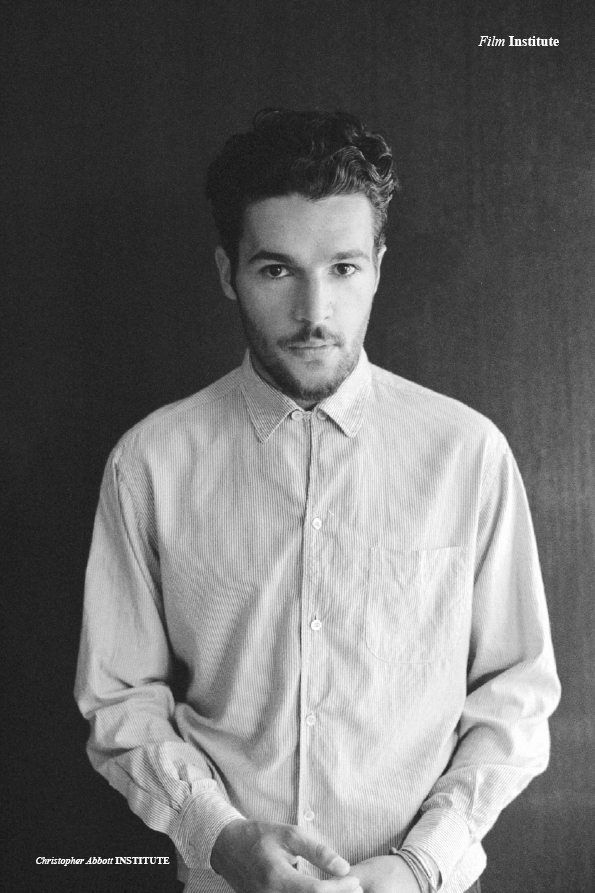
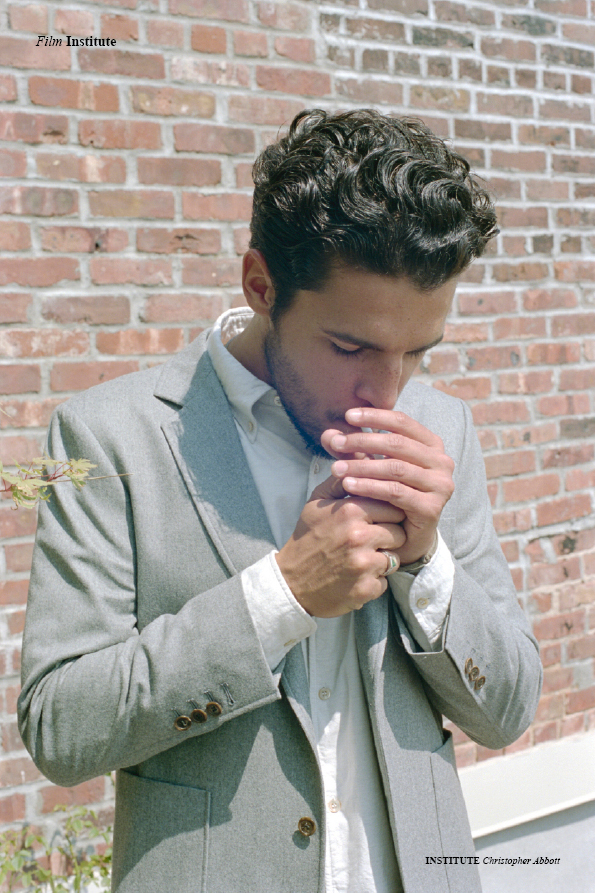
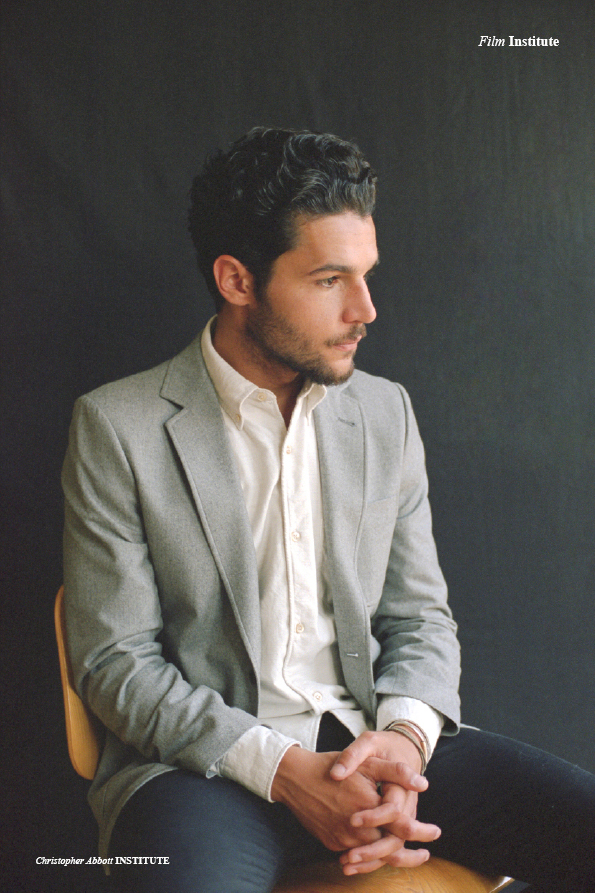
Christopher Abbott bristles at the thought of taking his profession too seriously. “In the grand scope of things, it’s a silly thing to make a movie or to do a play,” he says in that self-effacing manner we’ve come to associate with unpretentious, if not sensible, actors. A conversation with the 26-year-old plays out similarly to how he approaches his craft, which is to say that he’s present, polite, unhurried and measured when he speaks. But even when Abbott tries to downplay his current level of success and fame—he’s one of the stars on HBO’s hit TV series Girls—it’s difficult to impeach the fact that it takes a certain kind of unique talent, passion and, crucially, the drive and the patience to make a mark in the film industry.
2012 has served Abbott rather well from the get-go. This January marked the 28th edition of the Sundance Film Festival—an annual landmark celebration of American independent film, not to mention a proving ground for previously little-to-unknown talent—where the actor was chosen as one of the seven fresh faces of the year by Gen Art and 7 For All Mankind. The festival has continued to put the spotlight on people that stick their heads above the parapet—Abbott’s fellow Martha Marcy May Marlene alums, actress Elizabeth Olsen and director Sean Durkin, are but two recent examples. Up next for Abbott is the release of another feature film called Hello I Must Be Going, which premiered in the U.S. Dramatic Competition at Sundance this year.
Institute: Are you currently shooting new episodes of Girls?
Christopher: I’m not personally, but I know they’re currently shooting new stuff. I actually go back in a few weeks to shoot. I’ve done little stuff here and there though.
Institute: You have a prominent role on Girls now, but you previously took on smaller parts on things like Law & Order and Nurse Jackie. Are you getting comfortable with the work schedule that comes with TV?
Christopher: Well, we shot the first season of Girls last year and the workload was a little bit different for that because I was also doing a play at the same time for several months. It felt sort of intense for that reason. I guess it was a bit overwhelming at the end of the day, but I kind of liked it. I would literally shoot the show during the day and do the play at night. Other than that, the vibe on the set of Girls wasn’t stressful at all. Lena [Dunham] and Jody Lee Lipes, the cinematographer, both came from the independent film world, so they wanted to keep things mellow on set.
Institute: Were they very revealing about your character arc on Girls before you signed onto the show? What did you know about Charlie going in?
Christopher: Lena writes from personal experiences. She writes about the people she meets and the people she’s known for a long time. I auditioned for the pilot and didn’t have too much to go on initially. When I went into audition, Lena was there in the room and she gave me a bunch of character descriptions, but that’s about it.
Institute: Tell us about the evolution of your character in the first season. And where do you think Charlie is headed in season two?
Christopher: During the first season, I think the evolution was that he’s in this conflicted relationship with his girlfriend Marnie. He was really blind to what was actually going on between them and quite naïve in that sense. As the relationship went on, Charlie started to realize his role in that sort of one-sided, volatile relationship. He didn’t like that after realizing what was happening. With the new season, I don’t know much yet. I haven’t read the scripts and really don’t know what happens.
Institute: There are people out there who really love this show or hate it for whatever reason. Either way, why do you think this show attracts so much attention?
Christopher: I think it’s because the show is so specific. The situations that take place are pretty minute, but in a good way. Lena’s really good at taking everyday situations that might be fleeting for a lot of people and blowing it up into this thing. She really has a knack for putting things under the microscope, fully realizing that these seemingly small moments are actually significant. These moments, for her, tell us how we grow as a person and how it affects us. I think we can all relate to something like that because the situations are so recognizable. And even when certain things aren’t recognizable to us, it’s entertaining to watch anyway in a voyeuristic way.
Institute: You started out in theatre.
Christopher: I did for the most part.
Institute: Why did you choose theatre over TV and/or film at the beginning? Was this a conscious choice that you made?
Christopher: It wasn’t so calculated. I was in New York at the time and theatre just happened to be around so prominently. I started going to these big open calls for plays while in school and got to know a lot of theatre people in New York. It just started snowballing like that at the beginning. I guess I grew up liking film more, but I really enjoy theatre now. I would love to keep going back and forth between everything.
Institute: You worked at a video store when you were younger. How did something like that shape and influence your dreams looking back?
Christopher: I was 14 or something like that when a friend of mine got me a job at the video store he was working at. It was this small, family owned video store in my hometown. I became really good friends with my friend’s family and continued working with them—my friend eventually opened up a wine store and I worked there too. I worked many different jobs growing up. I didn’t necessarily think about acting at all even though I liked watching movies.
Institute: You were the toast of Sundance this year. Hello I Must Be Going was chosen as the opening night film and they named you one of seven fresh faces. What does something like that do for an emerging actor?
Christopher: I really don’t know… I’d say not particularly anything. [Laughs] It’s certainly nice, but I don’t like to dwell on things like that. I absolutely love Sundance. I think the programmers are so smart and it’s a lot of fun to be apart of. More than anything, I like the idea of communities. I have a lot of musician friends and enjoy the idea of festivals because you get to check out your friends playing here and there in one location. And then you play a show and your friends can come see you. When you go to a film festival, it works the same way because you can go see the films that your friends made and they can come see yours. There’s a lot of room for dialogue.
Institute: I met Drew [Innis] at Sundance two years ago.
Christopher: One of my good friends!
Institute: I met him through Dominick [Volini] from Baron Wells. Then I met Brady [Corbet] and Elizabeth [Olsen] through those connections. Sundance feels so small when you create that community for yourself.
Christopher: It’s a family thing. I met those guys really early on. I met Brady and Sean [Durkin] a year before I joined Martha Marcy May Marlene. We all became such good friends.
Institute: How did Hello I Must Be Going come to you?
Christopher: It was another auditioning process. I enjoyed the dynamic between the character that I play and the one Melanie Lynskey plays. I thought it was a unique and specific relationship. The broad picture is this big age difference between the two characters since I play the younger one. Personally, I was more attracted to the idea of these two confused people trying to figure out their lives together.
Institute: Your character in the film comes to the realization that he doesn’t want to act anymore because he was only doing it to make his mother happy in a lot of ways. What did your own parents make of your decision to act?
Christopher: I started acting kind of late so I really hadn’t thought about it until I went off to college and took an acting class. I was an adult by the time I decided to pursue acting so my parents were supportive. They always let me figure things out on my own.
Institute: What other aspirations did you have prior to acting?
Christopher: That’s the weird thing about life because there are little decisions you make that will either take you down this road or that road. I thought about starting a landscape business with a couple friends when I was still in college. I think being a landscape architect could’ve been nice. Realistically, I think it’s healthy not to get so obsessed about having this or that career path. In order for me to stay happy in acting, I need to consider it as just part of the pie and not have it be the whole thing.
Institute: A lot of actors tell me about their downtime between projects and how excruciating it can be sometimes. How do you fill that void for yourself?
Christopher: I play music. I go upstate a lot to visit my sister. I don’t like feeling stagnant and do whatever necessary to not feel that way. That’s really important to me.
Institute: What are some of the biggest misconceptions about the film industry from a working actor’s point of view?
Christopher: I’m still learning a lot about how this whole thing works and what it all means. [Laughs] Maybe one big misconception would be that it’s this flashy world. There’s a part of it that’s that way obviously, but it’s really not in a big sense especially when you’re starting out in something like theatre in New York. The theatre world here’s pretty contained and there’s a sense of community to it. We get together to show the same play every night, which seems absurd in itself, but it’s a beautiful thing when people pour their heart into something. In the grand scope of things, it’s a silly thing to make a movie or to do a play. But who knows? Everyone has a different take on it. I think it’s a powerful thing to commit to something that deeply.
Institute: Is it difficult watching yourself onscreen? Do you get very critical?
Christopher: I used to be a little bit more critical of myself, but you just have to take in the fact that you did this thing at a certain point in your career and learn to live with it. I guess that’s part of your job as an actor because you just want to keep growing. If I get critical about my past work, it’s more about looking back and trying to learn from those experiences. I don’t have too hard of a time in that sense.
Institute: When your agent sends you a screenplay, what normally catches your eye first?
Christopher: Initially and instinctually, you look at the role you’d be playing first and consider if it’s something you can actually take on. You also look at the bigger picture and see how it will be executed. When you’re a part of something, you obviously want it to look cool. [Laughs] I look at who’s directing it and who’s shooting it. How the movie will look is kind of important to me. Film is a collaborative thing and there are so many factors that play into it that determines how it will turn out. Basically, you want it to be a really good movie. It’s important to look at who else is working on it.
Institute: Where do you see yourself going? I’m not trying to ask you the 5 or 10-year question, but you must have an inkling of a trajectory for yourself with the screenplays, the meetings and the reactions you’ve been receiving.
Christopher: I think it’s a dangerous thing to try and plan a legacy. I try not to set a particular path for myself. As you go through this process, you become more knowledgeable about how things work. When I was younger, I thought that every good thing that happened to me was for a reason. You get this job and think all the planets have aligned. Then you begin to realize that it’s not like that at all. There’s a danger in getting too caught up in yourself and losing the muscles that you once had in order to continue being an actor. I really mean it when I tell you that I didn’t get into acting with this idea of being in movies or creating a name for myself.
Institute: What does acting offer you?
Christopher: I was actually talking to my girlfriend about this and she made it clear to me. She said, “The way you approach acting is from a social studies standpoint.” It’s really about meeting interesting people and studying human behavior. I don’t believe in the aspect of fame where some people feel like they’re somehow owed something. It’s a terrible thing. “I deserve to…” No, you don’t. [Laughs] If you get to do something that you love, enjoy it because it might not last. If you lose it, you lose it.


 INSTITUTE