Jackson Boxer and the Discipline of Desire
In the heart of Vauxhall, beneath chandeliers that hang like relics from a forgotten theatre, Jackson Boxer sits at a small marble table inside Brunswick House. Around him, the quiet hum of a late lunch service begins to build its rhythm: the soft percussion of cutlery, the low murmur of conversation, the muffled choreography of the kitchen just beyond a velvet curtain. It is a room that understands drama — faded grandeur, deliberate decay — and it feels like the perfect setting for a chef whose entire career has been spent navigating tension: between control and chaos, instinct and discipline, restraint and appetite.
Boxer has an unmistakable presence. Tall, sharp-eyed, alert. He does not perform the role of chef so much as inhabit it — though not without ambivalence. In many ways, he is an unlikely figurehead for modern British dining: a classically minded technician with the instincts of a provocateur, suspicious of excess but unafraid of intensity.
“I don’t really believe in the romance of kitchens,” he says early on, almost apologetically. “Restaurants are machines.”

Accidental Beginnings, Inevitable Path
For someone so revered within food circles, Boxer’s entry into cooking was not part of a neatly mapped culinary destiny. “I didn’t grow up thinking I’d be a chef,” he says plainly. “It wasn’t encouraged. My parents wanted me to do something more stable — be a lawyer, an academic.”
Stability, however, was never quite the family language. His father, Charlie Boxer, is a food writer and the founder of the Notting Hill institution Italo Deli; his mother, Kate Boxer, is an acclaimed artist. Creativity was everywhere, yet oddly uncelebrated. “Food was central to our life,” he reflects, “but not taken seriously. It wasn’t something noble — it was just something done.”
It was during his teens, working in restaurants almost by default, that something clicked. Kitchens, with their unforgiving tempo and total demand for presence, suited him. “I was introverted, bookish, very internal,” he says. “But in kitchens, there’s no room for hesitation. You just do. That directness — it was incredibly liberating.”
The appeal was not glamour but necessity. Cooking offered a clarity he hadn’t found elsewhere — a place where thought dissolved into action.
Discipline as Creative Catalyst
Boxer dismantles culinary mystique with the same precision he applies to his plates. “Restaurants are machines,” he repeats. “You have a limited number of chefs, burners, plates, minutes. A dish can be brilliant in your head, but if it doesn’t work in that reality, it doesn’t work.”
Across his restaurants — Brunswick House, the seafood-focused Orasay in Notting Hill, and Below at Stone Nest, a subterranean cocktail-and-supper space — his food speaks in an elemental language: fire, acid, salt, fat. Dishes arrive with deceptive simplicity, often austere at first glance, yet layered with technical nuance and emotional intelligence.
“If there are three ingredients on the plate,” he says, “each one has to earn its place. Creativity without execution is just indulgence.”
It’s a philosophy rooted in discipline, but not rigidity. Boxer’s kitchens are known for their energy — collaborative, demanding, alive. “The kitchens I run are disciplined,” he says, “but they’re also invested. Everyone’s part of the rhythm.”
That rhythm — relentless, physical, exacting — is where his creativity lives.
“It wasn’t encouraged. My parents wanted me to do something more stable — be a lawyer, an academic.”
The Economics of Beauty
When Boxer opened Brunswick House in 2010, London’s dining landscape felt different. “Back then,” he says, “rents were manageable, young people had disposable income, and restaurants felt possible.”
Now, the margins are tighter, the pressures heavier. Rising costs, stagnant wages, and a more cautious public have reshaped the industry. “It’s hard,” he admits. “You don’t want to make dining feel exclusionary, but survival requires brutal honesty about what things cost.”
His answer is not austerity, but flexibility. Menus that allow generosity without intimidation. “A guest should be able to spend £40 or £140 and feel equally welcome,” he says. “Luxury doesn’t mean extravagance. It means intent, care, experience.”
In Boxer’s world, luxury is not abundance — it’s precision.
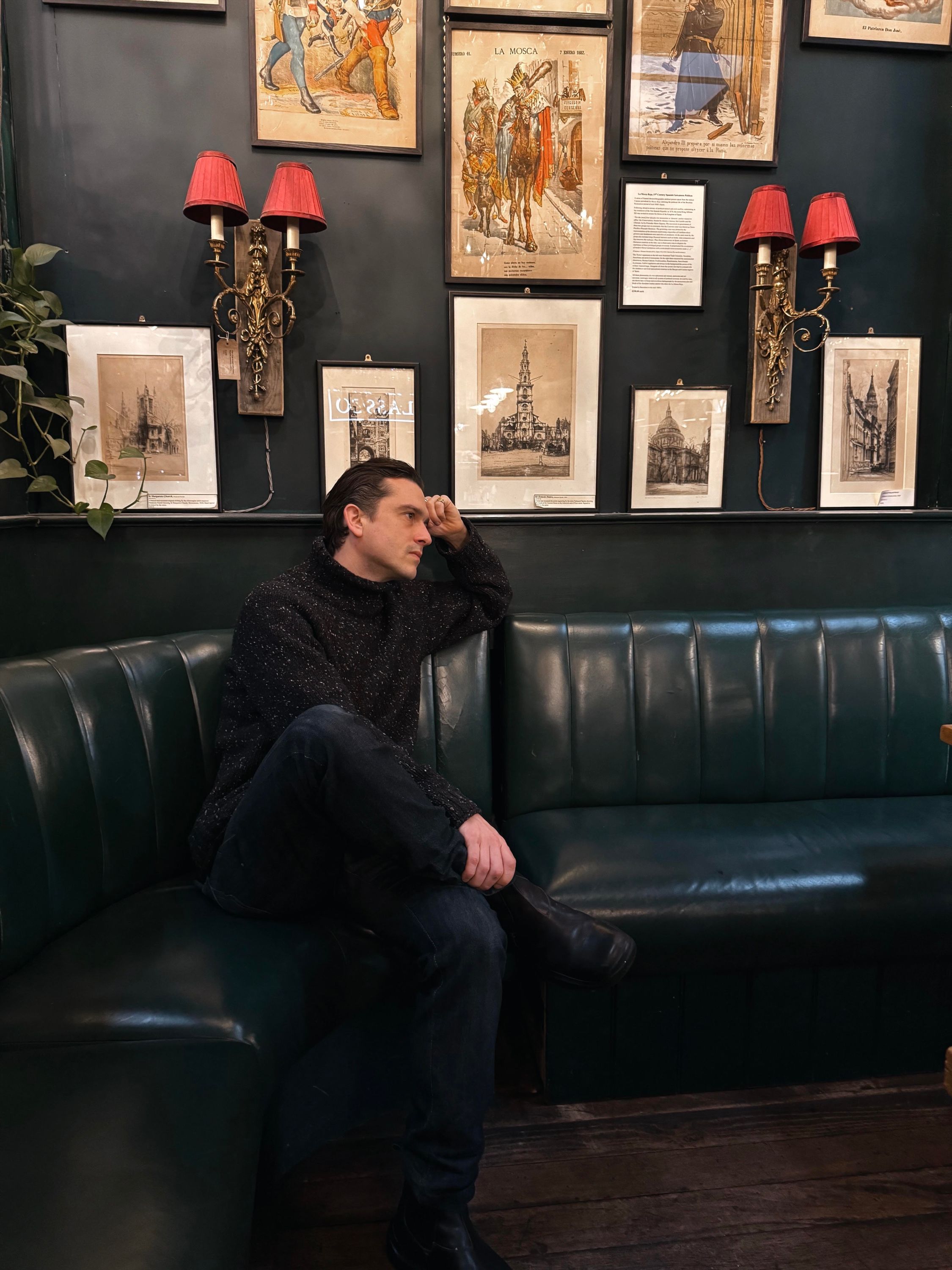
Scroll, Desire, Repeat
Boxer is acutely aware of how desire is now generated. “We live in a digital attention economy,” he says. “People are scrolling, hungry, bored — and then they see a plate of food and say: fuck it, I want that.”
He plays the game — photographs dishes, posts menus — but never confuses representation for reality. “Food isn’t just about how it looks,” he says. “It’s smell, sound, time of day, who you’re with. It’s being somewhere. Instagram gives you the idea, but it’s never the experience.”
Still, he is pragmatic rather than cynical. “It’s useful,” he concedes. “We put something up and the next day it’s on someone’s table. That immediacy is powerful, and we’d be naive to ignore it.”
Desire, after all, has always been part of dining. The medium has simply changed.
“When you’re hungry, your palate is sharper. And honestly? A little hunger is creatively useful.”
Abstinence, Appetite, and the Ritual of Restraint
In an industry defined by indulgence, Boxer’s decision to stop drinking is quietly radical. “So much of restaurant culture is built around wine, looseness, excess,” he says. “But I wasn’t happy. I wanted to rebuild my relationship with everything — myself, my work, my appetite.”
The shift has sharpened his relationship with food. Cooking days rarely allow for formal meals. “You don’t really sit down to eat,” he explains. “It’s more like tasting, snatching.”
Hunger, he suggests, is not the enemy. “When you’re hungry, your palate is sharper. And honestly? A little hunger is creatively useful.”
There is something almost monastic in the way he describes it — restraint not as deprivation, but as clarity.
He still loves being cooked for. “I adore it,” he says, smiling. “I just wish it happened more often. It’s rare — and maybe that’s what makes it so special.”
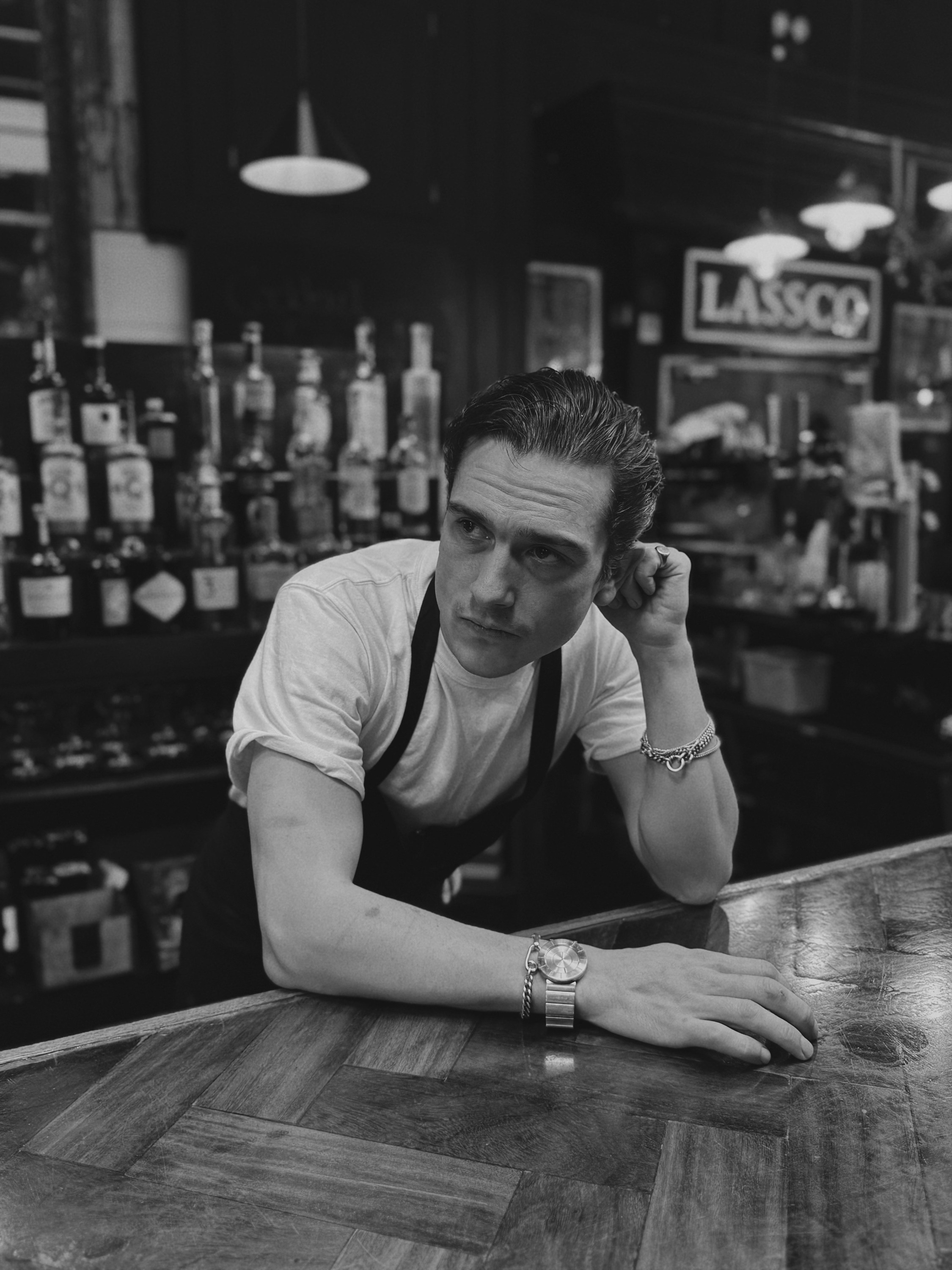
The Perpetual Motion Machine
If there is a single belief that underpins Boxer’s work, it is this: nothing is ever finished. “Restaurants have to evolve,” he says. “The moment something feels finished, it’s already dead.”
Menus change. Teams shift. Rooms subtly reconfigure themselves. Permanence is not the goal. “You can’t romanticise it,” he says. “Restaurants are fleeting. They exist in moments.”
A perfect evening. A perfect bite. And then it’s gone.
He finishes his espresso — now cold — and glances toward the kitchen. There’s a nod, a half-smile. Service is moving. Something is beginning.
“Perfection isn’t a destination,” he says, already rising from the table. “It’s a process. You get up. You do it again tomorrow.”
And in that repetition — disciplined, restless, exacting — Jackson Boxer continues to shape one of the most thoughtful, quietly radical voices in British dining today.

 INSTITUTE